Several uses in the square finned haeting element industry
2022-09-17
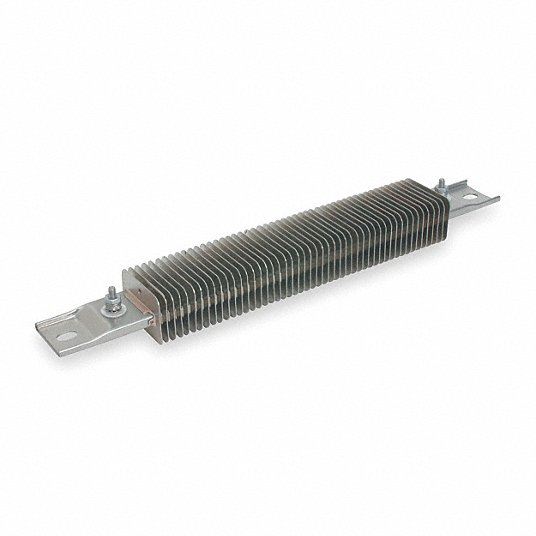
The two fins of the H-finned tube are rectangular, approximately square, and the side length is about twice that of the light tube. It is an extended heating surface. Boiler H-type fin tube economizer technology Most of the boiler economizers produced in my country in the early days are designed to have a smoke velocity of more than 9m/s. In recent years, the fuel used in power plants has low calorific value and high ash content. In addition, many boilers save coal. Due to the structural defects of the fin tube itself, there are important problems such as high exhaust gas temperature, wear of the economizer, ash blocking and serious ash accumulation during operation. The economizer produced by the H-type fin tube provides an effective solution. way. Fin tube is mainly used for new economizer and power station ship boiler maintenance and manufacture boiler H-type fin tube type economizer technology, H-type fin tube, also known as H-type fin tube, also known as butterfly tube, it It is to weld two steel sheets with arcs in the middle symmetrically with the light pipe to form fins (ribs or butterflies).
(1)Technical principle of fin type economizer wear. Since the wear rate of the tube is proportional to the 3.33 power of the flow rate of the flue gas, if the flue gas velocity is reduced from 9m/s to 7m/s, the wear rate will be reduced to 43% of the original. At the same time, experiments show that the finned tube itself has the effect of concentrating the fly ash in the middle of the tube row, so the use of the finned tube economizer has the effect of reducing wear in structure
(2)Technical principle of H-type finned tube economizer H-type finned tube, also known as H-shaped finned tube, also called butterfly tube, it is to symmetrically connect two steel sheets with an arc in the middle to the light The tubes are welded together to form fins (ribs or butterflies), and the frontal shape is quite similar to the letter "H", so it is called an H-finned tube. The two fins of the H-finned tube are rectangular, approximately square, and the side length is about twice that of the light tube. It is an extended heating surface. The H-type finned tube adopts the flash resistance welding process method, which has high welding seam fusion rate after welding, high welding seam tensile strength and good thermal conductivity. The H-type finned tube can also be made into a double-tube "double H"-shaped finned tube, which has a good structure and can be used in occasions with long tube rows. Structural form: the basic form is "H" type and double "H" type
(3)Advantages of H-type finned tube1.Excellent anti-wear performance The wear is mainly the impact and cutting effect of ash particles on the tube, and the wear is the most severe around the tube and the horizontal line at 30o, S1/d=S2/d= 2, the wear amount here is 3 times the average value. Staggered arrangement Due to the change of airflow direction, the wear of the second row is the most severe. When S1/d=S2/d=2, the wear amount of the second row is twice that of the first row, and the wear amount of each row is generally 30 times higher than that of the first row. %~40%. Arranging the first row in sequence is the same as arranging the first row in a staggered row. Afterwards, each row will wear less due to the lack of airflow impact. Under the same other conditions, the maximum wear of the in-line tube bundle is 3-4 times less than that of the staggered tube bundle. The wear speed of the pipe is proportional to the coefficient of unevenness of flue gas velocity KV3.33, and is proportional to the coefficient of unevenness of fly ash concentration Ku. H-type finned tube economizers are arranged in series. H-type fins divide the space into several small areas, which have the effect of equalizing the airflow. It is different from the staggered arrangement of the light-tube economizers and spiral fin economizers. , Compared with the longitudinal fin economizer, under the same other conditions, the wear life is 3 to 4 times longer. The flue gas side baffle protects the elbow section.
2.Reduction of ash accumulation The formation of ash accumulation occurs on the back and windward sides of the pipe. The staggered arrangement of the pipes is easy to flush the pipes, and the backside is less dusty. For pipes arranged in a row, because the airflow is not easy to wash the back of the pipe, the arrangement of the pipes is more ash than the staggered arrangement. Because the fins are welded on the two sides of the tube that are not easy to accumulate dust, and the airflow flows straight, the direction of the airflow does not change, and the fins are not easy to accumulate dust. There are 4~10 gaps in the middle of the H-type fins, which can guide the air flow to purge the dust accumulation on the fins of the tube. Because the helix angle of the fins guides the airflow to change direction, the fin tube has serious ash accumulation, and cannot be used for economizers that do not form loose ash accumulation. Field operation practice shows that the H-type fin tube does not accumulate dust, while the spiral fin has serious dust accumulation.
For the longitudinal finned tube, since the fins are welded on the windward side and the back of the dust accumulation, since the airflow flows along the fins, the airflow changes direction to the tube to form a vortex. Fouling is easy to form in some areas. The H-shaped fins can achieve the best soot blowing effect due to the formation of straight channels on both sides. Because the helix angle of the fins guides the airflow to change direction, the fin tube has serious ash accumulation, and cannot be used for economizers that do not form loose ash accumulation. Field operation practice shows that the H-type fin tube does not accumulate dust, while the spiral fin has serious dust accumulation. For the longitudinal finned tube, since the fins are welded on the windward side and the back of the dust accumulation, since the airflow flows along the fins, the airflow changes direction to the tube to form a vortex. Fouling is easy to form in some areas. The H-shaped fins can achieve the best soot blowing effect due to the formation of straight channels on both sides.
(3)The space is compact and the cost is reduced. The pipe group is very compact and the height of the tail smoke well is reduced. The overall weight is greatly reduced, reducing the load on the suspension system. Reduce economizer and overall boiler cost.
(4)Reduce the side resistance of the flue gas and reduce the operation and investment cost of the induced draft fan.
(5)Reduce solder joints and improve reliability.

(1).png?imageMogr2/format/webp/thumbnail/!10p)